

My "Guidelines" on Learning
A response to a friend

A couple weeks ago a friend asked for "the guidelines from you for learning." Maybe because it seems I know so much. While I still feel like I know very little, I do have a huge variety of skills, knowledge and wisdom. I have failed so much in so many ways in my life. But failures give us clarity. Just don't give up.
Anyway, I told her I would "think about it." In reality, I did not actively think about it but waited until the answers arrived—and they did, this morning, right before I write this. I was busy learning and working.
I don't consider these to be THE guidelines. I did not reference any other person's list in these two weeks, only three images that I specifically thought to retrieve. This is just my synthesis of what I've heard, read and experienced.
Main guideline: Be curious.
Be curious. Desire to learn. Pursue what interests you, bit by bit.
This does not always seem possible when you are having to learn something for some degree. Well, maybe there's something wrong with that model...
Second guideline: Be patient and persistent.
Be patient. Be persistent. It takes time to feel like you're really learning. Each bit might not feel significant—but if you keep at it, you'll look back in surprise! And it takes at least 3 weeks to develop a new habit, even 2-6 months for major psychological changes.
Third guideline: Take breaks.
Take breaks. Do things that are purely fun and not work, refreshing your mind. Move your body with exercise; it's a positive feedback loop. Our mind, body and "spirit" are interconnected and each need care.
Get really good sleep every night. Most learning sticks in during the sleep cycle, when the subconscious mind can process it. Meditation also achieves this—you have to switch from active conscious processing to a relaxed state for your subconscious to process and integrate.
When you wake up, don't rush to work. Take like an hour to slowly greet the day, stretch, jog, pray, think creatively, prepare tea of matcha & moringa. Then work.
And then, while working, check in with yourself. Every half hour to an hour, step back to check your focus and energy. When you realize you’re hitting a wall, it’s time to take a walk, nap, or do some other activity. Learning to work more is a process. It has taken me a very long time to optimize my flow state, and I’m still learning how to optimize. Also, taking naps and walks is often when the genius solution or invention idea hits you. There are innumerable historical examples of this.
Fourth guideline: Ask for help.
Ask for help. Talk it out, whether that's a specific problem or your general direction. No one learns well completely in isolation. Sometimes, if you write out your problem or talk to someone—even an inanimate object like some programmers do with rubber ducks—you'll suddenly get an answer yourself. Other times, we need the expertise and wisdom of others.
Asking for help seems to be one of the hardest things in life to do. I went most of my life not asking for help when I needed it.
There are two things I will say on this:
You not knowing, and needing to ask, does not mean you are weak or bad. You just don’t know yet! Think back to when you were a child, when you obviously didn’t know how to do something but learned quickly because there was no mental resistance to it. You were recently born, figuring out that you shouldn’t stick a fork in the electrical socket and haven’t yet learned to drive. In the grand scheme of things, you’re always recently born and still a child.
Many times, by asking someone for help, you end up helping that person think about something differently and advance their goals. Even when you ask an expert of 12 years something, you may open their mind to something they have been too set-in-their-ways to see.
Fifth guideline: SMART goals.
Have a clear goal with your learning. Have realistic deadlines.
The "SMART" goals model specifies:
S—Specific, clear, concise goals.
M—Measurable goals to quantify progress.
A—Achievable goals based on who you really are and what you can do. We can experience profound change with our skills and our identity, but some things are unrealistic. It is unrealistic for me to think I will become a professional NBA athlete at 30 years old with little experience, Kanye.
R—Relevant goals aligned with our business or our heart's desire.
T—Time-bound goals with deadlines. There is something about urgency and sense of importance which focuses us, eliminates distractions and makes us feel like we're on a quest!
So, for example, if embarking on a quest to learn a developer skill:
S—Specify what you want to achieve. There are seemingly infinite programming languages and paths, so this requires you to first evaluate the landscape and make a choice. You can always make a different choice with language and path later—the important thing is to get started and to learn the fundamentals first. The fundamentals can be transferred easily.
And, you're in luck: there's a website Roadmap.sh which lays out clear steps forward! Note that you don't have to learn every single optional thing—make sure you're sticking to the main quest, not chasing every shiny side quest.
M—Measure your goals. One example is in building a personal website and adding new features to it as you learn them elsewhere. Careful: do not measure progress by how many tutorials you've watched. You need to take the knowledge from tutorials and apply them to your own thing.
A—Every developer roadmap laid out above is achievable, but you have to make sure they are Relevant to you.
R—Choose a path that is relevant to you. I know I want to build helpful apps, websites and games. I know some UI/UX stuff is important in this, but it's not my only path because I enjoy the systems-level engineering and programming problem-solving. I know cyber security is not my path, though I need to know enough of it to design better systems. Alas, I can ask cyber security experts for advice when I need it.
Especially now with AI being such a buzz, too many people are blindly rushing "into AI" thinking it's an existential matter of swim or sink. While AI is shifting the entire paradigm of how we live and interact, we still need the fundamentals. AI is a tool to assist us, not something to replace us. Unless you're fundamentally replaceable. On that note, the best thing you can do is develop authenticity, creativity, inner peace and social connection (perhaps a non-comprehensive list). Without what makes us fundamentally human—which at this point seems to be only defined by “spirit”, consciousness and flesh—you may in fact be indistinguishable from AI.
T—Time-bound your goals, realistically.
If you don't have a deadline with accountability, or some wild optimistic desire, you'll almost never be able to learn a skill effectively.
We also need to not rush the process. No human can blitz through any of these roadmaps in just one week and have a secure, applicable understanding. Exceptions include someone already having parallel, fundamental knowledge, or extraordinary genius meditators with no other responsibilities. Effectively, you are not an exception to this. Accepting this makes the process go smoothly.
I am not an exception,
but I can be exceptional.
Sixth guideline: Live on the edge.
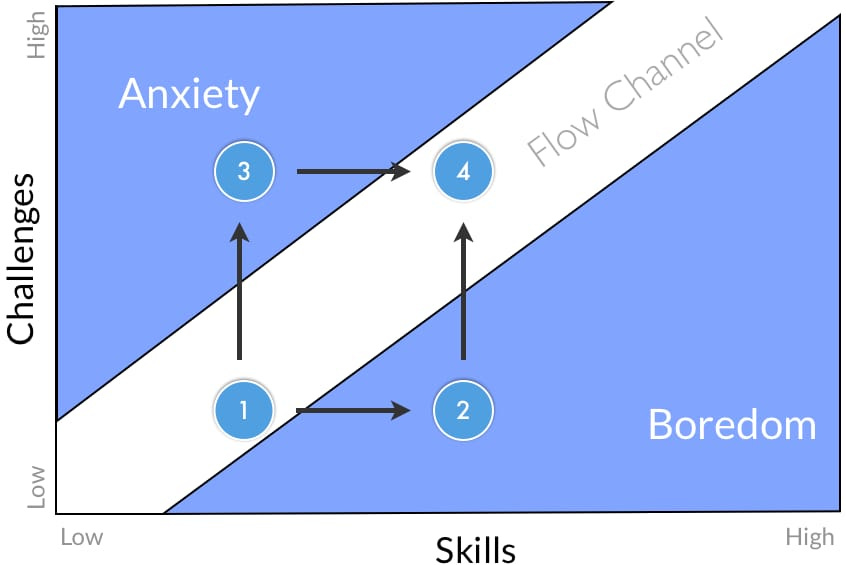
You want to be at the edge of your comfort zone and challenge. The challenge needs to be just slightly above your skills and knowledge. That tension is the good zone, the growth zone, the flow zone.
Stay in the flow channel between boredom and anxiety, where the challenge is healthy and interesting.
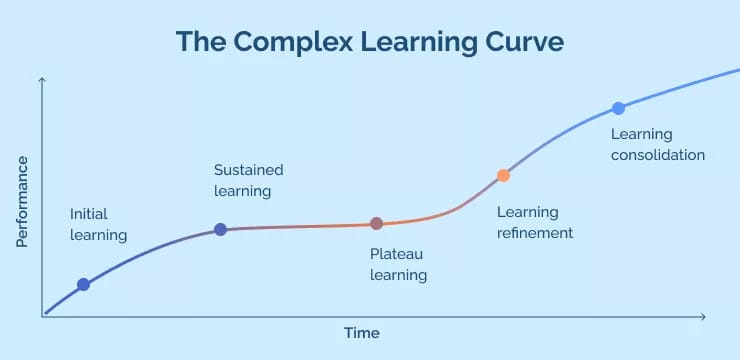
Understand that learning happens in curves and waves.
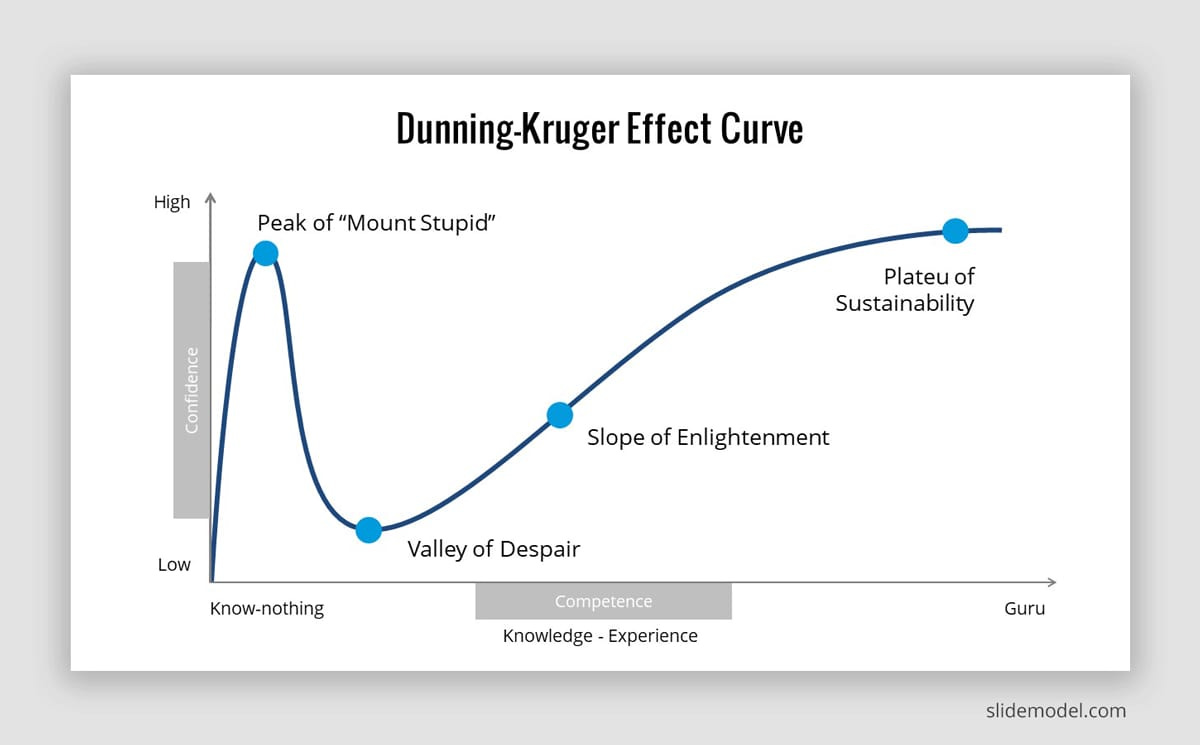
Remember that everyone experiences the Dunning-Kruger Effect. Learning the basics is easy and feels great. Moving beyond the basics feels rough and demoralizing. Just don't despair, keep going. You're doing great. You got this.
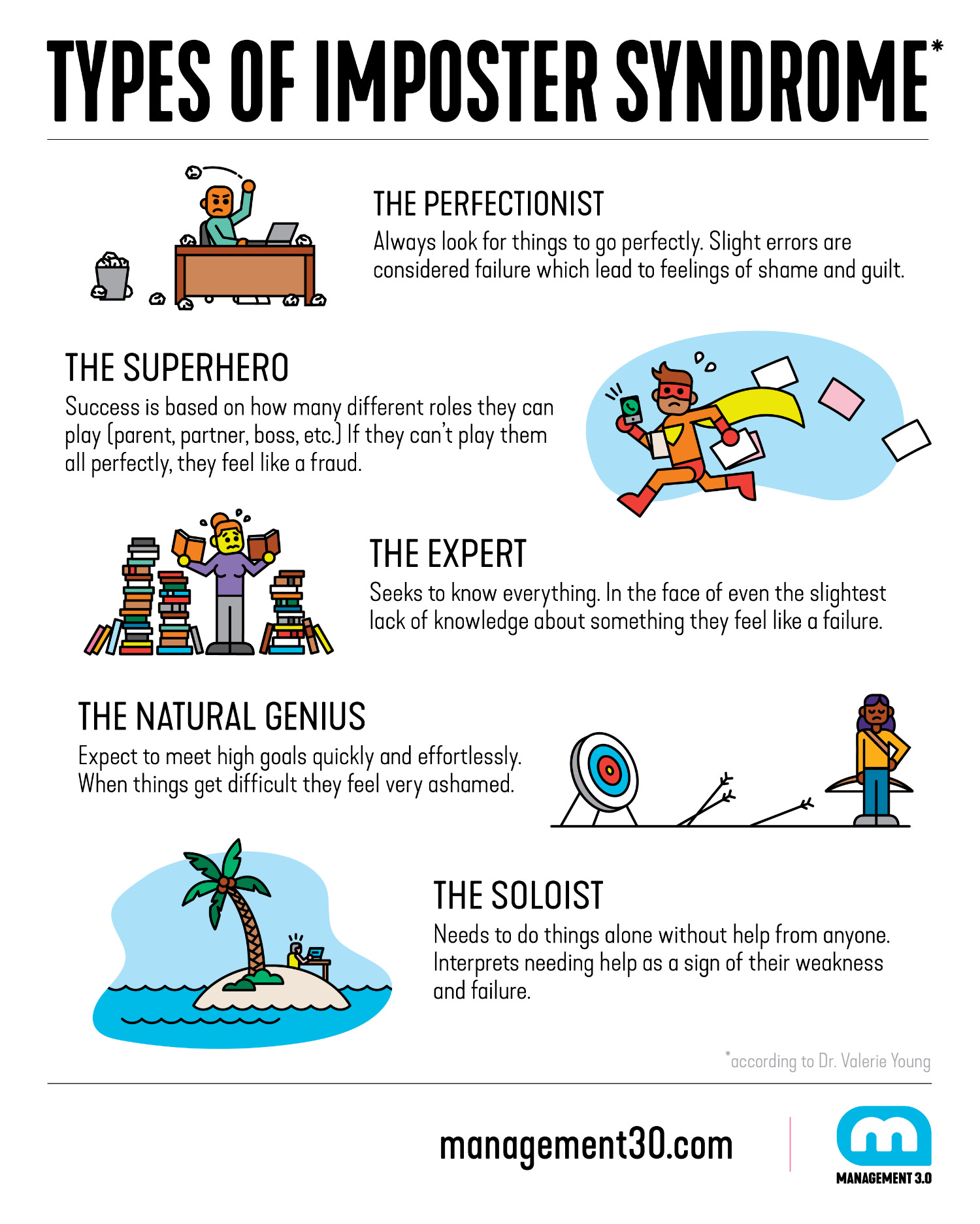
Imposter syndrome is also something everyone experiences at one point, in different ways. Fundamentally, imposter syndrome is a lack of clear awareness that the experts, out there doing great things and making the tutorials you're following along, have also gone through months and years of the same quest you are embarking on. The only way to hit max level is by leveling one day at a time!
Tip: identify your flavor of imposter syndrome with this graphic, and learn to relax it. Humility is an essential ingredient in the formula for learning. We humans are all desiring and doing roughly the same things.
Seventh guideline: Reflect and Re-orient.
Reflect on your progress and your direction. If you’re losing interest, it could be that the challenge isn’t enough or that it’s too much. It could be that you have learned what you needed to and it’s time to re-orient your direction.
Sometimes we set off on a quest with good intention and planning, but somewhere along the way it becomes very clear we’re no longer aligned with ourselves. That’s natural. Sometimes we have a “truth” that only lasts so long. It was true I should have pursued something, and then it becomes true that I should pursue something else. To really learn effectively and do good things in the world, we need perspective through experience.
Maybe you join a summer camp or learning program, and weeks in determine it’s not really meant for you long-term. That’s fine! You’ve learned that, and met people, and probably learned other things. No regrets. Keep going.
You’ll be surprised how knowledge from one domain can be applied to another—one example of mine is how training in Taekwondo martial arts has ingrained in me patience and discipline. My training taught me there is a sort of “muscle memory” related to the subconscious mind that “learns” and “performs” on its own. We train it on an activity, giving it data and experience, and then the activity becomes more effortless, even automatic. My physical training taught me I can learn almost anything with patience and persistence. To ebb and flow between effort and rest is to be like a surfer paddling out past the break, awaiting the next set of waves, and seizing the opportunity when it rises. Know this wisdom, apply it to most everything—and you will find joy and fulfillment in your learning.
Enjoy learning,
Bruce☆♡
Extra tip: I have found a tool which genuinely helps me focus and get more done than ever before. I have tried "binaural" beats / solfeggio frequencies to immense benefit over years. You can find all sorts of them on YouTube, although I've realized that not all of them are genuine. I could link my own playlist if desired.
Most recently I discovered this "learning coach" Dr. Justin Sung and followed along to this video specifically for weeks:
Last week I decided to purchase a brain.fm annual subscription because it's worked so well for me. I am not affiliated or sponsored, although that would be nice so I can write more. I am just sharing what I've learned and what works for me. Note: I started off on "high modulation" but it made me feel weird. Low, with nature sounds, works best for me personally.
Bonus: my personal mantra inspired by @the_wilderless on Twitter
I NEED A SERIOUS PROJECT—
WHICH ALLOWS ME TO DIRECT MY LIFE-FORCE,
GIVES REASON TO CULTIVATE LIFE-FORCE,
AND DISCERNS WHAT DRAINS MY LIFE-FORCE.
A little crazy is a good thing. Have healthy obsessions, but also touch grass and care about your loved ones. Ok that's it for now.
Do you have any reflections or suggestions?
UPDATE about the mentioned Roadmap.sh :
It's now easier than ever to learn! They just added "a floating chat widget on all roadmap pages. Think of it as your personal guide while learning. You can ask it anything about the roadmap, dive deeper into any topic, get recommendations for what to learn next, or even ask it to test your knowledge.
It can also create a personalized roadmap for you, keep track of your progress, suggest project ideas, and more, all without leaving the page."
They also added a "Dedicated Roadmap Chat Page" and "Global Chat Assistant" which "understands which roadmaps you're following, and keeps track of your progress. It can help you discover new roadmaps, give career advice, recommend courses, and offer personalized learning suggestions based on your goals.
You can even upload your resume to get tailored feedback, which will not only improve the quality of the responses but also provide tips on improving your resume and job search."
we're in a Golden Age of learning!!! log off socials & news and get to Crafting!!
Added paragraphs to guideline three and four, and wrote seven.